Please visit

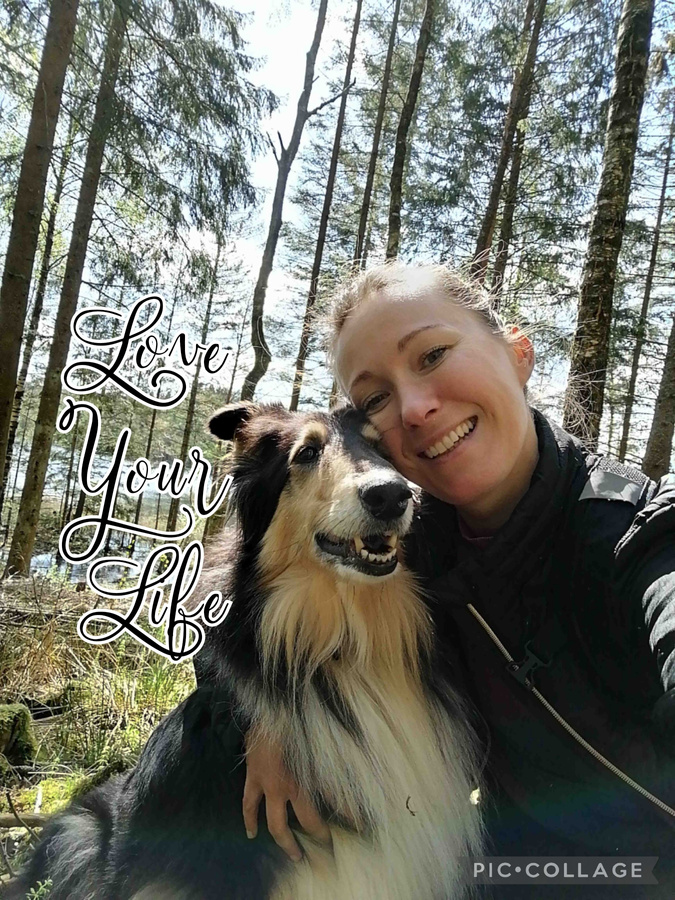
Marta
Misiak
Certified IET, EFT and NLP Practitioner
🇬🇧 🇸🇪 🇵🇱

Touch
Get in
Sessions are available in English 🇬🇧
Terapi erbjuds på svenska 🇸🇪
Terapia jest dostępna po polsku 🇵🇱
The very first meeting is an Information Session. It lasts 1h and is free of charge. This is the meeting during which you have a chance to decide whether you feel comfortable with me, if we connect and if you'd like to continue working with me as your therapist. There's no right or wrong. Go with your feeling.
Connect


IET= EFT+NLP
Imagine healing your past and see how that could affect you now and your future… Imagine that you can transform your past, how would that change you and your life now?
Imagine living the life you want and love…
Integrated Energy Techniques IET is a combination of NLP and EFT processes creating a powerful tool in helping in this soft, noninvasive way to access negative memories and situations, to transform them and build new, positive ones that allow a person to live the life they want and love. Imagine changing negative beliefs you have about yourself or negative habits you have. (more)
Neuro-Linguisting Programming NLP allows rewiring and modifying unconscious and unwanted behaviours/reaction/negative beliefs and transforming them into desired ones. Understanding how our thoughts process and behaviour influences us and our choices. Our words, they way we express ourselves using words make us be, feel and act in a certain way. NLP was created with the goal to bring the best of us, to enable and create desired success in our private and professional lives. (more)
Emotional Freedom Techniques EFT are tools helping reducing and eventually separating the emotional charge from a situation, memory or incident. That ultimately results in lowering stress hormone cortisol and allowing the body and mind to rebalance themselves and heal. That in its turn allows for neutral approach towards that situation, memory or incident without experiencing the emotional intensity, being able to think clearly, unaffected, calm. The physical consequences of stress, negative emotions being repressed start to fade away ie. headaches, neck pains, back pains as the emotional issues improve. One of the EFT effects are improved sleep quality. Increased stress hormone in your body wakes you up between 1am and 3am, thoughts circulating in your head in the middle of the night. EFT affects amygdala (storage for emotionally charged situations) and hippocampus, not hippopotamus :), (recording tool for “what, when, where” things happened) and promotes cortisol levels reduction, immune system increase, anxiety and pain reduction, increase in happiness. (more)





"Talking only" therapies focus solely on
- the head - thoughts
EFT and NLP focus on
- the head - thoughts
- emotions - what you feel
- body - physical reactions
As EFT International manual says, "The amygdala (...) is central to our fight-flight-freeze-flop response to threat, which includes the secretion of cortisol and adrenaline as well as other strong bodily responses and it directly triggers body reactions without the intermediary of conscious thought. (...) the parts of the brain that govern survival mechanisms are simply not amenable to being influenced by talk alone. As anyone who has had a panic attack can tell you, no amount of talking and reasoning can change the powerful full body response that happens when their fear is triggered."
"Unless the freeze response is released from the amygdala in the brain, the devastating physical and emotional effects of trauma will be self-perpetuating. To heal trauma we must extinguish post-traumatic procedural memory cues and you can't do that with words alone" (The Body Bears the Burden by Robert Scaer, MD)
Think now how you react in a stressful situation...
Head - You can't gather your thoughts maybe? People talk to you but you can't really hear them, the words just become a noise and you can't reply with sense?
Body - Stomach goes bananas? Hands maybe sweating or shaking?
Emotions - You feel fear, worry maybe? You just want to run far away from that situation/place?
IET
Integrated Energy Techniques (IET) are a form of energy healing modality that aim to clear physical, mental, emotional, and spiritual blockages in the body.
Integrated techniques consider the interconnectedness of thoughts, emotions, behaviours, and bodily sensations. They focus on understanding the whole person rather than focusing solely on symptoms, leading to a more comprehensive treatment approach.
Integrated Energy Therapy (IET) is an attunement-based energy healing modality. It is a safe and gentle way of releasing energy blockages that can cause imbalance and disease in the body.
IET promotes healing in all areas of our mental, emotional, and spiritual well-being. During an IET session, positive energy is used to work directly with the body's cellular memory and energy field. The techniques used in IET painlessly awaken and clear core cellular memory that has been suppressed within the body, mind, and spirit. By releasing old energy patterns and limiting beliefs, IET supports individuals in empowering and balancing their lives in the present.
Addressing negative thought patterns and cognitive distortions is a core component of many integrated therapies. By challenging and restructuring unhelpful thoughts, clients can develop a more balanced and realistic perspective, reducing anxiety and stress.
It is a mind-body-spirit practice that combines energy channeling and specific pressure points where emotions and beliefs are stored. IET works at a deeper level beyond traditional energy healing modalities like Reiki.
The therapy involves a light, therapeutic touch (tapping) applied to specific parts of the body known as cellular memory areas. It is recognised to release energetic correlates of emotional or physical distress at the DNA level.
IET can be beneficial for clearing energy blocks accumulated from physical, mental, emotional, or spiritual trauma.
Integrated approaches often incorporate mindfulness and acceptance techniques to help clients stay present in the moment and accept difficult emotions without judgment. This can be particularly beneficial for trauma survivors, as it can help them process distressing experiences.
Integrated therapies include behavioural techniques that promote positive changes in behaviour. Clients can learn coping skills, problem-solving techniques, and relaxation exercises to manage stress and anxiety more effectively.
Here are some ways IET can help with these issues:
1. Stress relief: IET helps to release and clear energy blockages that contribute to stress. By promoting relaxation and balance in the body's energy system, it can help reduce the physical and emotional symptoms of stress.
2. Anxiety management: IET techniques aim to release suppressed emotions and limiting beliefs that contribute to anxiety. By clearing these energetic imprints, individuals may experience a sense of calmness, clarity, and inner peace.
3. Trauma resolution: IET can be effective in addressing the effects of trauma stored in the body's cellular memory. It works to gently release and transform traumatic imprints, allowing for healing and integration. By releasing the energetic charge associated with trauma, individuals may experience a reduction in trauma-related symptoms and an increased sense of well-being.
4. Emotional balance: IET supports the release of suppressed emotions and helps restore emotional balance. It can assist in processing and releasing intense emotions such as fear, anger, sadness, and grief, which may contribute to stress, anxiety, and trauma. Clients learn healthy ways to identify and express emotions, reducing emotional overwhelm.
5. Self-empowerment: Through the process of clearing energy blockages and limiting beliefs, IET can help individuals regain a sense of personal power and self-esteem. By releasing old patterns and embracing positive beliefs, individuals may feel more empowered to manage stress, anxiety, and trauma.
6. Relaxation and rejuvenation: IET sessions are often experienced as deeply relaxing and rejuvenating. The gentle touch (tapping) and energy work can help promote a state of relaxation, allowing the body and mind to release tension and recharge.
EFT
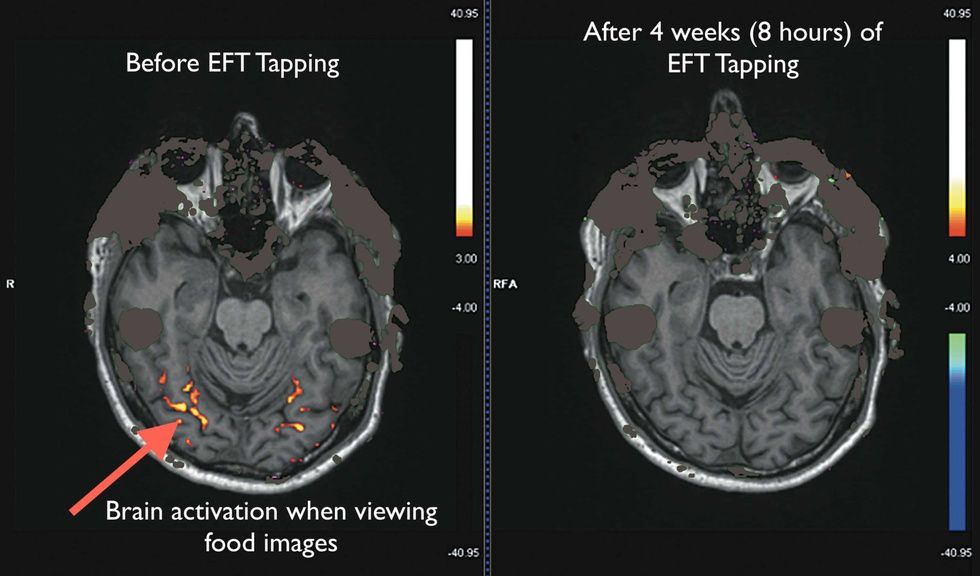
Source: https://www.petastapleton.com/science-of-tapping-2022
EFT reduces negative emotional charge in memories or situations to the point that we can think clearly, unaffected by the overwhelming emotion connected with it. That is when the acceptance, forgiveness and healing can take place. It is a therapeutic approach that combines elements of Eastern acupressure and modern psychology. EFT involves tapping on specific points on the body while focusing on emotional or physical distress.
Energy Medicine point of view:
EFT is called acupuncture without needles. By tapping on specific points on the face, torso, head and/or fingers we tap on so called meridians - energy pathways in the body. That allows the body to rebalance those energies and to start the process of healing.
Scientific point of view:
EFT seems to affect amygdala (responsible for stress) and hippocampus (memory centre) resulting in changes in neurological responses, reduction of cortisol levels in the body and reduction of arousal triggers. By tapping on the acupuncture points we are sending signals to the stress centre amygdala, that in its turn sends relaxing signals to the whole body "no danger, no need to run away, no need to stress".
This information is already covered by other sources like EFT International Ltd or EFT Universe so please visit their websites for more information.
Dr Peta Stapleton is a great go to source regarding research on EFT, please see here: click me. There's also this great PDF with research summery from EFT International Ltd.

click me!
Areas of work for EFT include but are not limited to:
- stress, anxiety, worry, anger
- phobias, fears
- grief and loss
- physical issues, among others:
- pain (treating the emotional strain of feeling pain, chronic pain)
- skin issues
- traumas and PTSD, among others:
- childhood traumas
- discrimination
- rape
- bullying
- children of borderline parents, partner of borderline partners
- unhappy relationships
- conflict resolution
- cancer
- insomnia
- food cravings, weight issues,
- exhaustion, low energy, wellbeing
- self acceptance
- confidence issues
Why these are only examples of where EFT can applied? As EFT works on any situation, memory or belief that has a negative charge. If you have a negative emotion you can use EFT on it.
Here's how EFT can help with stress, anxiety, trauma, and negative beliefs:
- helps to reduce stress and anxiety by addressing the emotional and energetic imbalances associated with these conditions. The tapping process helps to calm the nervous system, release tension, and promote relaxation. It can also help reframe negative thought patterns and promote a more positive mindset.
- can be effective in addressing trauma by working on the associated emotions and beliefs. Tapping helps to release the emotional charge and negative energy associated with traumatic experiences. It can also be used to process and integrate traumatic memories, reducing their impact on daily life.
- can help identify and transform negative beliefs that contribute to self-sabotage, low self-esteem, or limiting beliefs. By tapping on specific points while focusing on these beliefs, EFT can help release emotional blockages and create new, empowering beliefs.
- can support emotional regulation by providing a tool to manage and cope with overwhelming emotions. Tapping helps to bring balance to the body's energy system and can be used to reduce emotional intensity, regulate emotions, and promote a sense of calm.
- is often used as a self-help technique that empowers individuals to take an active role in their emotional well-being. Once learned, it can be practiced independently whenever needed, providing a practical and accessible tool for self-care.
- can provide practical tools for managing triggers that may arise in relationships or situations reminiscent of the parent-child dynamic.
EFT Tapping Points
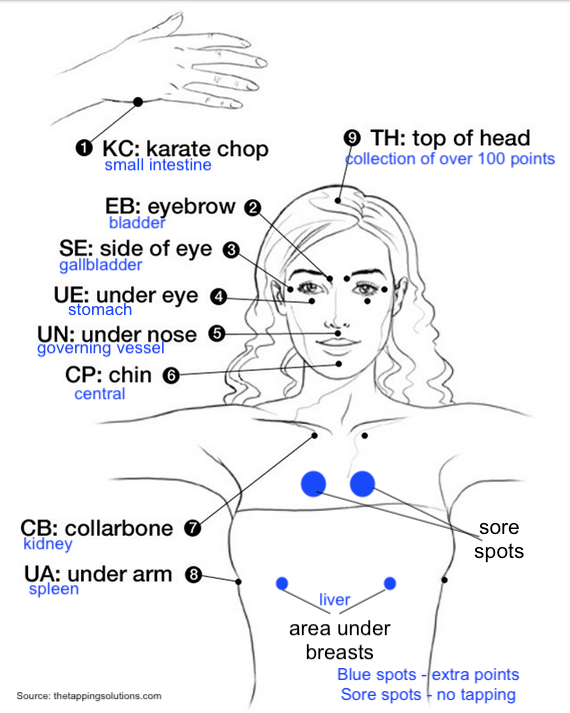
This picture illustrates the acupoints used in EFT. The picture is from thetappingsolution.com; however, I have added some extra comments and two points that were not originally included. Both the comments and the points added by me are marked in blue.
The liver points are helpful when dealing with anger. This area is also where the lymphatic system is located. The liver organ stores our anger. All the anger that we cannot or do not want to release becomes trapped in our body, particularly in our liver. This can lead to discomfort, irritation, and eventually, disease.
These two points can be tender, especially for women. These points align with where we wear bras. Bras provide support but also exert pressure on the liver points, especially when underwired bras are worn. These points are also where lymphatic fluids flow. When they are subjected to pressure for at least 8 hours a day, or possibly more, over a span of 20 years or more, the flow of lymphatic fluids can become blocked and disrupted.
And what is lymphatic system responsible for?
- draining lymph from the tissues
- absorbing fat-soluble vitamins
- fighting diseases and infections
- transporting and eliminating waste products
- filtering out toxins
So, our lymphatic system gets stuck, ergo toxins and waste products stuck in us, the anger is stuck in our body....
"the disease comes from within"...
As Dondi Dahli from Eden Energy Medicine says: "if it hurts, it means you need it" (video). My points hurt like crazy at the beginning!
Where are the liver points located? Think bra strap level that surrounds your chest. It is the same line as for the "under arm" points.
Sore points - those points can be used instead of "side of hand"/"karate chop" point. These are also connected to your lymphatic system, so touch them gently as they might be tender. Do not massage hard as this can be felt as extreme tiredness the day after - simply, as you set off the lymph to work extra, ergo, extra filtering and detoxing.
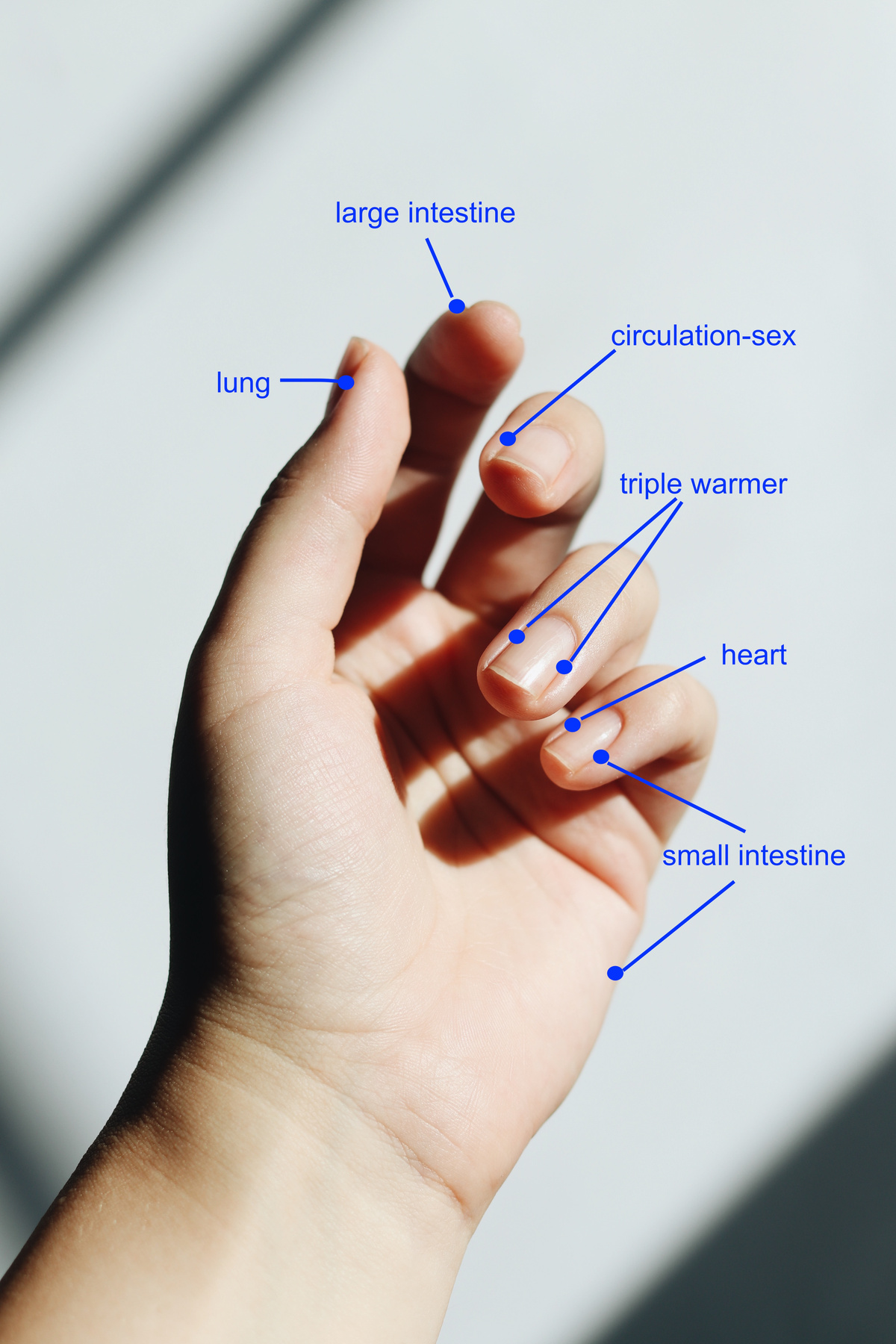
We also have extra tapping points on the fingers. You can tap on these points if you'd like to. The above procedure is enough to get the results but feel free to experiment and observe how that affects you and decide whether you'd like to use those points with the situation you're tapping on or go without it.
There's an interesting article on tapping points, organs they are connected to and function of each point and organ on The Tapping Solution Eye brown point, for example, is connected with the bladder and tapping on that point helps with releasing trauma, hurt and sadness. Promotes peace and emotional healing. You don't have to read it for the EFT to work when you use it but it is an interesting article for those who like to know more.
NLP
NLP can be beneficial in addressing stress, anxiety, and trauma in the following ways:
Identifying and reframing negative thought patterns: NLP helps individuals become aware of their negative thought patterns and beliefs that contribute to stress, anxiety, and trauma. By recognising and reframing these patterns, individuals can develop more positive and empowering perspectives.
Managing emotions: NLP techniques can assist in managing emotions associated with stress, anxiety, and trauma. By learning techniques such as anchoring and visualisation, individuals can gain control over their emotional states and reduce the impact of negative emotions.
Building resilience: NLP can help individuals develop resilience and coping strategies to deal with stressful situations. It provides tools to reframe challenges, build confidence, and develop effective problem-solving skills.
Addressing past traumas: NLP techniques can be effective in addressing past traumas by helping individuals reprocess and release negative emotions associated with traumatic experiences. This can lead to healing and a reduction in the impact of trauma on daily life.
Improving communication skills: NLP focuses on improving communication and interpersonal skills, which can contribute to reducing stress and anxiety. Effective communication can enhance relationships, reduce conflicts, and create a supportive environment.
A fish cannot see the water it swims in
Chinese proverb
What the proverb implies is that sometimes we are so immersed in our surroundings or environment that we fail to recognise or appreciate its significance.
NLP is a field that focuses on processing and understanding human language, both written and spoken.
Just like a fish swimming in water, we use language every day without consciously thinking about its complexity and the underlying structures.
NLP helps us uncover the hidden patterns, meanings, and relationships within language, allowing us to gain insights and make better use of this valuable resource

Photo by Nothing Aheadvon pexels.com
How the sessions look like
HOW AND WHERE DO WE MEET?
We meet online with cameras on. You’ll be provided with a link to a video conversation. No installation is required. It is web-based.
You choose a place where you feel safe and comfortable, such as a chair, sofa or any seating arrangement that allows your back to rest comfortably. Public place is not advised as you will talk and access situations and emotions that are private for you. Additionally, certain methods used during the sessions will require you to relax and close your eyes.
THE FIRST SESSION
The first session is an introduction session that allows us to see each other for the first time and to introduce us to each other. You will be invited to describe what you’re looking for, what your issue is, your expectations. This first hour is your hour during which you decide if you feel comfortable and safe with me and if you’re interested in starting working together with me as your therapist and you as my client. You are expected to say “no, thank you” if you do not feel that I am the right person for you.
HOW DOES IT LOOK LIKE?
First few sessions are spend on getting to know you, details about your issue you want to work on. It takes time to gather information. The types of techniques used and the intensity of them will be determined from session to session and decided on depending on the intensity of the issue we talk about. Some session will involve mostly tapping, while others will incorporate more NLP methods. In some others we may focus mostly on talking and self-discovering.
HOW LONG BEFORE I GET BETTER?
Many people ask how long it will take to get better, how many sessions someone has to attend to get better. We live in a world of quick fixes, fixes that only treat the symptoms but not the causes. The EFT and NLP sessions are to get to the cause of an issue. It all depends on the client, on how open the client is to touch certain matters that are painful, uncomfortable and scary. It’s ok to be scared and uncomfortable about something. It’s ok not to want to talk about the most difficult problem right away. It’s ok to take time. Do not put pressure on yourself that you have to be healed within a month. The issue you come with has been brewing for many years in many cases, and we will take the time you need to take away petal by petal, peel the layers that cover up the issue. You decide the pace and speed in which we move.
YOURE INVOLVEMENT
You are encouraged to work at home in between the sessions. You will be asked to create a list of issues that affect you in a negative way, that have a negative emotional charge. You’ll need to write each issue as a point, with some details, and grade it 0-10 there 0 is no negative emotional charge and 10 is the highest possible negative emotional charge. The list will consist of any possible issues like: your relationship with other people, past memories, past events, any physical reactions, any physical pain, negative beliefs about yourself, fears, addictions, bad habits, financial situation and so on. I will ask you to choose one of the points, the one you feel you can work on on your own at home, and you will apply EFT to it.
e.g.
- the day my cat Softy died and my partner John said “it was just a cat”, number: 10
- it was september 2007, we lived in San Francisco, it was raining, i’ve had that cat for 14 years! my dad who is not amongst us anymore gave it to me to my birthday, John’s comment hurt me, I did not feel understood, I felt a clamp in my stomach, my heart sank, I wanted to yell at him but I didn’t
- Sue from work pissed me off with yet another comment about my diet habits, number 10
- “oh, another protein shake? doesn’t seem to work for you...”, everyone at work heard that, that b***ch, I hate her, I wanted to say something back but I was just paralysed, my brain just wasn’t there, I wanted to cry and run away, hide,
- I’ve applied for so many jobs and I don’t get a reply... I’ll never get a job I like, I’m never chosen to be called to interview... I don’t have what it takes to get that job, number 5
- I don’t have enough experience, I can’t sell myself, why do I have to sell myself? I don’t understand why they don’t call me..
- I have this pain in my neck, on the right side, i’ve had it since I remember, number 9
- strong pain, a needle like, can’t rise my hand up
As you see, the list can consist of anything that has a negative charge and the numbers can very from 10 down. You put on that list anything that comes to your mind. The beginning will be slow but once you get down to it you’ll easily make 50-100 points.
WHAT IS THE DIFFERENCE BETWEEN EFT/NLP SESSIONS AND TALK SESSIONS?
The difference between the EFT sessions and most of the “talk sessions” is that you actually can work on certain issues on your own. Once you’ll learn the technique of EFT you can apply it in any situation and any time a negative emotional charge appears. You will be able to help yourself when a therapist is not there. And this is the most important point of my work - to be able to learn you tools that you can use yourself when you need them so you do not need me anymore.
The progress of our work together depends on your involvement and engagement.
Please, refer to Terms and Conditions to read more about the sessions, role of the Practitioner and the Client, Code of Conduct and more.

Meditation, mindfulness don't heal your past. It treats its symptoms but the core issue remains unhealed. Make sure you don't use them as a "get away" tool but a way to quiet down, alone time.
22/05-23
22/05-23
"Spirit is awareness but body translates awareness into sensation. We came here to experience life and to create life."
Dr. Bruce Lipton
"...many physical symptoms are the product of you not listening to your exiles and if you don't listen to them, they'll find whatever they've got [...] they do know about whatever generic predispositions you have for different diseases. They know how to give your pain, physical pain. [...]
Symptoms are messages your body is sending you trying to get your attention. Trying to inform you, making you to listen to it."
Dr. Richard Schwartz
"A lot of people with trauma find it difficult to do mindfulness and meditation exerecises because the minute you quiet your mind, a lot of parts get really loud."
Meagan Gibson, Trauma Super Conference 2023
What is trauma?
Trauma is like a deep emotional wound that happens inside us when we go through really tough or painful things. It's not just about what happened, but how it keeps affecting us afterwards.
Trauma is not what happens to you but what happens inside of you.
Imagine someone getting hurt in a car crash - the crash is the event, but the hurt stays. Trauma is like that hurt, but it's not just physical. It sticks in our mind, body, and feelings, and it can come back and bother us even later on. It's like a bunch of hard stuff all mixed together - the hurt itself, plus the feelings we didn't deal with, the ways we try to cope, and the stories we tell ourselves about it. And all this can even make our bodies feel not so good.
When we don't work through this hurt, it keeps us feeling stuck in the past. It stops us from fully enjoying the present and becoming who we want to be.

Trauma from Greek means "wound"
"Until we recognise and understand it, it's like a big roadblock to growing as a person. It makes us doubt ourselves, messes up our relationships, and makes it hard to see the good things in life.
Dr. Gabor Maté talks about all this in a book called "The Myth of Normal." He shows how not dealing with trauma can really change how we feel and act.
"Trauma is perhaps the most avoided, ignored, belittled, denied, misunderstood, and untreated cause of human suffering"
Peter Levine, leading trauma psychologist and healer
22/05-23
Sleep and trauma - Dr Bruce Lipton
"Imagine your body as a smart machine that needs rest to stay in balance. Just like how a car needs a pit stop to refuel and fix any issues, your body uses sleep to recharge and fix itself. Dr. Bruce Lipton talked about this at the Trauma Super Conference in 2023.
When you're asleep, your body secretly does a lot of important things. It balances things like acidity and temperature. Even when you're in a coma, your body keeps things running smoothly. But when you wake up, your thoughts and feelings change everything.
Trauma is when something really bad happens that scares you. Your brain tries to protect you by remembering these scary things. It's like an alarm system that's always on, even when you sleep. This alarm system can be helpful, but it can also make you feel bad all the time if you hold onto those scary memories too much.
Think of it like this: your brain has a list of things it doesn't like, and if something on that list happens again, it reacts. It might make you feel scared, angry, or even freeze up. It's like having Jedi defenders inside you, ready to fight when they're not needed.

Photo by cottonbro studio: on pexels.com
But it's not just one thing that sets them off. It's a combination of things from the scary event. Imagine it's like a puzzle, and when all the pieces fit, your Jedi defenders get really active.
Different sounds, words, sentences, and even the way things look or smell can trigger reactions deep inside us, like red flags waving in the wind. It's not just one thing that sets off our body's alarms. It's like a bundle of memories from a traumatic event that activates our survival system. The Jedi warriors inside us, ready to fight for us, but sometimes they cause shaky feelings, unclear thoughts, tears, or even bursts of anger.
Sometimes, we cling to these memories, and that's when things get tricky. We might freeze up, unable to stand up for ourselves. It's like holding onto a heavy weight. We all experience tough times, and our minds are wired to remember them for safety. But there's a difference between learning from these moments and letting them consume us day and night. If we constantly focus on them, it's like sounding an alarm all the time – should we run, fight, or freeze?

Freezing is like hitting the pause button, especially when running or fighting isn't possible. Imagine kids enduring abuse from their family or people they rely on, or victims of trauma like rape. Sometimes, freezing is the only way to survive – to minimize the pain and get through it.
Photo by Lance Anderson on Unsplash
Our brain, particularly a part called the amygdala, scans our experiences, looking for familiar patterns. It's like a protective guard, but we don't need it all the time. Yet, when we hold onto traumatic memories non-stop, it affects us mentally and physically. Stress hormones flood in, affecting our immune system and making us feel on edge.
"When we hold on to trauma that experience is there all the time. Your whole life is in "closed mode"."
Imagine living with that traumatic memory always turned on, like living in a closed-off world. It's like being in a shelter, waiting for danger to pass. But just like in a shelter, you can't stay there forever. You need to open up, grow, and engage with life. If you hold onto trauma, it's like staying in that shelter too long, and it hurts your mind and body.

"Trauma - is not an event that took place but what that even has done to us, on the inside, to our nervous system and various bodily systems. It's our "unhealthy" respons to things that are not a threat."
Alex Howard, Trauma Super Conference 2023
Photo by Caleb Shong on Unsplash
Our bodies need sleep to heal and recharge. Trauma can disrupt our sleep, making us feel tired and unwell. Stress hormones take over, making it hard to think and heal. But techniques like IET, EFT, and NLP can help calm these alarms, allowing clear thinking and relaxation, even when faced with tough memories.
When you hold on to trauma the following happens:
- you're body releases a stress hormone
- it shuts down the immune system
- it shuts down the growth
- makes you less inteligent beacuse of changed blood flow due to stress hormone
- activates amygdala ("be aware, be alert, be looking for it, it's gonna happen, keep looking out for it")
- if you have your attention focused on the traumatic event all you're going to see are traumatic events
- in constant stress the cortisol shuts down the growth of the body, why? to run away, to fight or flight; the energy of your body goes to your legs and arms
- the stress hormone shuts down the organs in the gut. the visceral, lungs, stomach, pancreas, kidneys etc, why? -> the energy is sent to the legs and arms
- the stress hormone squeezes the blood vessels in the stomach and gut and tighten the blood flow so the blood is pushed to the arms and legs
- the immune system's protection is re-prioritised - if you're stressed and ready to fight or flight and you're immune system has to choose: protect you from a live threatening situation "fight/flight" or a bacterial infection then it's natural that the immune system chooses the first one and keeps pumping blood away from certain organs rather than focusing on fighting an infection
- the stress hormone shuts the blood vessels off in the thinking brain (prefrontal cortex) and the blood is redirected to the hindbrain (responsible for reflexes and reactions) ergo, NO THINKING; what does that mean? that under stress you lose the power to think and you just react
Under stress you lose the power to think and you just react

Photo by Nathan Cowley: on pexels.com
So, lets sum up:
- holding on to trauma means 24/7, 365 days a year you're on constant alert
- you dissociate from your body and feelings (protecting yourself from pain)
- you filter for negative things that prove you're right (about a situation, person, experience etc) - how many times have you thought "I knew this would happen! I knew I couldn't trust xyz"?
- trauma is strongly related to stress hormone cortisol
- chronic stress contributes to many negative processes in your body and mind
- chronic stress contributes to poor sleep
- poor sleep blocks the body's ability to restore itself
- when in stress you lose the ability to think
- when in stress you act and react
Sleep:
- sleep helps your body to reset, get rid of toxins, balance the body's systems
- long term lack of sleep, lack of good sleep causes that your body does not have a chance to reset, to "forget it for a moment" so the energy levels become low
Losing sleep over... your thoughts...
Falling asleep with thoughts spinning, waking up around 3am in the middle of the spinning thoughts that just seem to have been ON all the time, waking up in the morning with the thoughts still ON, as if your brain never ever stopped thinking, talking with itself... That kind of lack of sleep we are talking about here, stressed related lack of sleep...
Our bodies need sleep to heal and recharge. Trauma can disrupt our sleep, making us feel tired and unwell. Stress hormones take over, making it hard to think and heal.
This is were IET, EFT and NLP comes in. They have the ability to reduce the emotional charge of a situation, they send "it's time to relax, no danger here" signals to your body so you can THINK CLEARLY without being emotional. By taking care of your sleep and managing stress, you can help your body heal and grow, just like giving your car a tune-up to keep it running smoothly.
"And 90% of illnesses, they always say, oh, genes cause these problems, genes cause these problems, I go, less than 1% of disease is connected to genes. Less than 1%. Where the hell is the disease coming from? Over 90% is attributed to stress."
Dr. Bruce Lipton, Trauma Super Conference 2023
By taking care of our sleep and managing stress, we can help our bodies heal and grow. It's like giving our internal protectors a break and letting our system reset, just like a car tune-up. If you're curious, dive into Dr. Bruce Lipton's book "Biology of Belief" to learn more.
A Glimpse into My Journey
Let me take you on a journey through my personal experiences that have illuminated a path of growth and understanding.
Along this journey, I've explored the intricate threads that weave our reality, our relationships, and our sense of self.
I've delved into the power of language, how it shapes our emotions and influences our outlook.
I've learned how our beliefs can either hold us back or propel us forward, and how our perceptions color the world around us.

The Genesis of Discovery
Curiously, the foundational principles of Integrative Energy Therapy (IET) found an unexpected kinship with the world of dog training. Surprisingly, these principles underscore the very essence of canine interactions—how emotions are communicated, how positivity is nurtured, and how negative responses can be transformed into positive connections. This dog-human connection speaks volumes about the silent conversations of energy that transcend words.
The Language of Emotion
Picture this: words brimming with emotion, the subtleties of feelings woven within. "I have to go to work" versus "I'm excited to go to work!" These phrases carry more than just words; they carry the energy of our emotions.
Dogs may not understand vocabulary, but they're fluent in the language of emotion. They feel our joy, our stress, our tranquility, and our frustration. Their reactions mirror our emotional states, revealing the profound impact of our feelings on those around us.
So emotions... Before, when I was angry I'd be angry with everyone around me... Yelling at everyone, being irritated by everything... at people and things that had nothing to do with the actual reason or source of my anger. And what would happen then? Of course, people would tell me to zip it, that I should control myself, "why are you yelling at me?!" and I would create another situation loaded with frustration... I'm sure you all recognise this. So, Joy... when I was angry and would transfer that anger on her, she would just ignore me, walk away and the worst of all... she would not come back to me until I stopped being angry... AT HER. She taught me that it's ok to be angry, it's an emotion and emotions are ok but instead of offloading on her I could just offload it into the air! So instead of transferring this anger at her I just offloaded it by talking to her about it... I talked to her about the situation, the people involved and how I felt about it. Well, she didn't talk back but she didn't go away either. She was just there... Same when I was sad, she'd come and put her head on my shoulder or crawl up in front of me...

Joy, day after my operation
Learning from Canine Wisdom
There was a time when my anger was like a tempest, affecting those around me without discrimination. But my furry friend, Joy, taught me an invaluable lesson. Instead of projecting my anger onto her, I found a way to communicate. I realised I could channel my emotions without causing harm. In moments of sadness, she offered solace, reminding me of the importance of acknowledging and expressing emotions constructively. These lessons underscore the challenges we all face in dealing with our feelings.
Embracing EFT and NLP
This is where Emotional Freedom Techniques (EFT) and Neuro-Linguistic Programming (NLP) come into play, as beacons guiding us through emotional landscapes. EFT and NLP provide tools to navigate the labyrinth of our feelings, helping us unlock hidden insights and harmonise our emotional world. They teach us to recognise the whispers of our emotions—when boundaries are crossed, when fears arise, when losses are felt. These techniques empower us to achieve a synergy of mind, body, and spirit.
The Tapestry of Understanding
Imagine negative experiences leaving an imprint on your soul—a stamp that resurfaces when triggered by situations that bear even a semblance of the past. It's a cycle that can feel overwhelming, as if life is an unending cascade of challenges. But there's a way to transcend this cycle, to find resilience amid adversity.
A Personal Pledge of Support
Through my own journey, I've navigated intricate family dynamics, walked alongside those with borderline personalities, confronted discrimination, tackled childhood wounds, and grappled with self-doubt and anxiety. I've uncovered tools that have guided me toward healing and growth. Now, I'm here to offer you a hand, to walk alongside you on your unique path.

A Welcoming Haven
In our sessions, you're not alone. I strive to provide a safe and nurturing space where you can be heard and understood. My goal is to support you as you embrace the journey of self-discovery and transformation, utilizing the power of cognitive behavioral therapy (CBT) to guide you towards a life that resonates with authenticity and well-being.
So, let's embark on this journey together—a journey toward understanding, healing, and personal evolution. You deserve a life that aligns with your truest self, and I'm here to help you make that a reality.

Testimonials
"They are four of best case studies I’ve read and I’ve been doing this for about 12 years now! It shows that your empathic skills are shining through. Your calibration skills were excellent and you were able to track your client's verbal and non-verbal responses and modify the course of the session as appropriate. Your intuition skills also shine through. You clearly demonstrated empathy with your client that facilitated him to feel valued, understood and respected ."
- Anne Yates
positivelivingmann (@) gmail.com
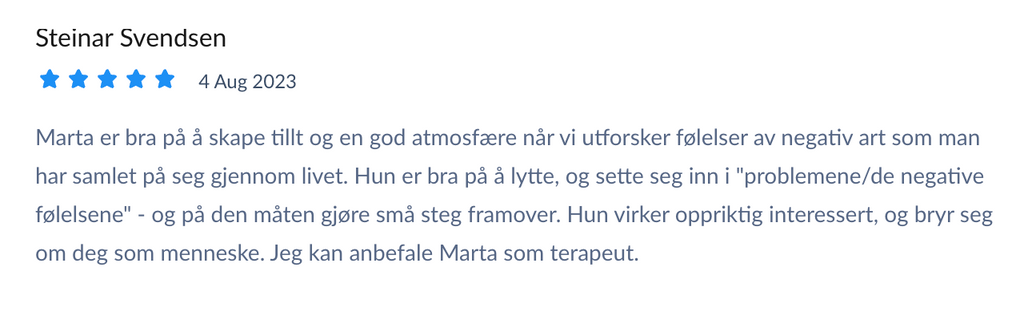
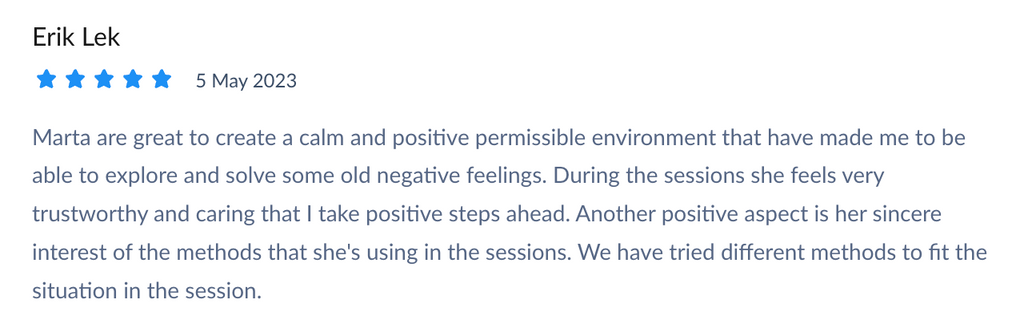
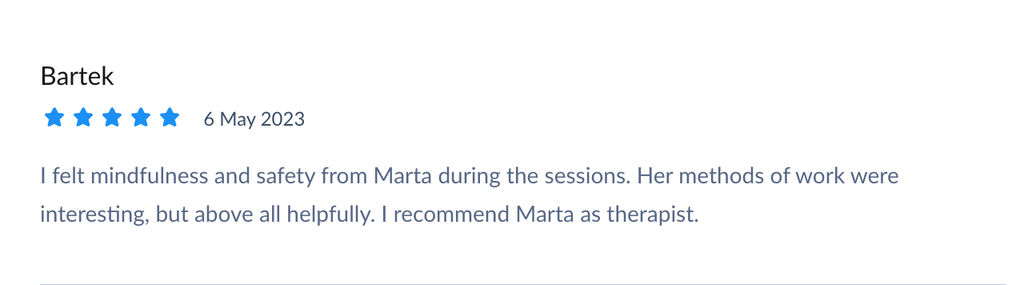
Source: https://loveyourlife.setmore.com/eftsessions/reviews
TERMS AND CONDITIONS
Love Your Life EFT is Swedish based and these Terms and Conditions as well as Code of Conduct is valid under the laws of Sweden. Regardless of Clients’ location, any legal dispute must be resolved in the jurisdiction of the Practitioner.
Practitioner - Marta Misiak, certified IET and NLP Practitioner, EFT Student Practitioner,
Client - therapy client, person who decides for a session or sessions with the Practitioner. Client’s commitment and motivation are crucial. By agreeing to participate in the session Client agrees to engage with the process, complete any homework that the Client is given, It is with commitment, willingness and partnership with the Practitioner that the best results have a chance to occur. The Client is expected to notify the Practitioner of any upcoming holiday breaks minimum two week ahead (see Fees regarding holiday breaks).
Session - meeting/treatment/consultation. Sessions come in two versions:
set of 6 sessions 60min each
or
set of 4 sessions 90min each.
The type of the session is decided by the Practitioner together with the Client.
The session can take place online on Teleport, Zoom WhatsApp or similar service. The sessions are no cure or promise of fixing client’s issues the Client comes with to the Practitioner. For the best probable results of the session Client’s willingness to cooperate is important. Please, see point “Client” point for more details.
Information Session - the very first session the Client books with the Practitioner. This session is free of charge and lasts 60min. The point of this session is to meet each other, see if the Client feels safe and feels connection with the Practitioner. This session does not bind the Client to buy the consultation or any set. The Client is welcome to share information regarding their expectations and issues they wishes to work on. After the Information Session, the Client is free to choose to discontinue further work with the Practitioner, for any reason. The Practitioner is also free to choose to discontinue further work with the Client if the Practitioner feels this way. However, if both parts decide on continuing and commencing work with each other they agree on committing to the sessions.
When working remotely online, it is important that the Client makes sure that the environment they’re in is safe, secure, comfortable and free from interruptions as those can disturb the benefit of the session. That does not mean that the place the Client is in has to be quiet, however, it has to allow for undisrupted communication.
It is important that the Client provides the Practitioner with additional mean of contact (phone number, messenger etc) that allows for communication in case the online sessions is interrupted while the Client is in trance mode.
The Client is encouraged to keep their mobile with them, however, on silence mode.
If the Client doesn’t hear the Practitioner’s voice for a period of time 3min or more, The Client is to bring themselves back from the trance and contact the Practitioner on the phone number provided in the Practitioner’s email, website, FB page or LinkedIn. See contact details on the website.
Fees - the sessions are sold as sets, 1 set can be 6 sessions or 4 sessions, depends on the length of a single session, see below for options:
1 set of 6 sessions there one session lasts 60min
or
1 set of 4 sessions there one session lasts 90min.
The fee is paid in advance for the whole set. If the fee is paid by bank transfer, especially when it comes to international payments, the fee has to be received and booked on the Practitioner’s bank account the day before the first session of each set is to take place (i.e if the first session takes place on Tuesday the payment should be received on the Practitioner’s bank account latest on Monday, if a session takes place on Monday the fee should be received on the Practitioner’s bank account latest on Friday). The fee for each set is the same and the Client is informed about the fee on the Information Session. Any changes to the price will be communicated ahead of time (one month).
If the fee is not booked on the Practitioner’s bank account (as to the rules stated above) the session/sessions are considered not to take place/are cancelled until the fee is received.
A single session can be cancelled up to 24h free of charge. A session cancelled with notice shorter than 24h or a session that the Client did not show up on will be charged as usual (as if it took place) with no refund.
Once the fee has been paid and received by the Practitioner the Client has 3 months to use that payment for the sessions. After that 3 months period the fee is considered to be forfeited, no refund available.
Holidays - the Client is not charged for any sessions that could have taken place during any holiday break. However, the Client is expected to notify the Practitioner min 2 weeks ahead of the planed holidays so that the Practitioner has time to adjust. If the Client fails to do so the Practitioner can choose to charge for the "non-appearance" sessions.
Complaints - if the Clients wishes to file a complaint about the Practitioner’s they are welcome to do that by contacting EFT International Ltd. on www.eftinternational.org.
Reviews - Client may be asked and is welcome to leave a review regarding the sessions and service they receive.
The review can be left anonymously if the Client wishes to - then the review is welcome to be
sent in by email loveyourlifeeft@gmail.com to the Practitioner
or
done on Setmore https://loveyourlife.setmore.com/reviews
The review can be also done using Google or Facebook, however, the Client should be aware that they may be asked about their name:
Google -
Facebook - https://www.facebook.com/profile.php?id=100090931302440
Record Keeping
Security of Notes: the Practitioner is required to keep their notes of client sessions secure. This means paper records should be in a locked filing cabinet and digital ones password protected. The notes and any information regarding the sessions are kept digitally on my laptop or my e-reader, on iCloud or Google Drive or Dropbox secured with a password.
Content of Notes: Notes are kept brief, factual, and do not include comment, diagnosis, speculation, opinion or prognosis and do not include second-hand information from the client about other people.
Access to Notes: Courts may subpoena them and Clients have a right to ask to see them. Former child clients may, when they are adults, ask to see notes of the sessions when they were children.
Maintenance of Notes: Records of adult sessions should be kept for at least seven years, unless the Practitioner is working in a country where the law requires them to be retained for longer. In Sweden it is 7 years. For children it is advisable to keep them beyond the point at which the client will be old enough to make a claim for damages against an alleged perpetrator should they wish to do so. The current recommendation is to keep child notes until, as a minimum, the client is aged 25.
Safe Disposal of Notes: The Practitioner should arrange for their records to be destroyed securely should they die or become unable to continue working. The Practitioner is to dispose of the notes securely themselves from time to time during their working life and/or after they retire.
CODE OF CONDUCT
Clients with be treated with respect, honesty and compassion.
Clients are expected to show respect and honesty towards the Practitioner during the treatment. Any signs of disrespect or dishonesty can lead to interruption of the ongoing session and even result in terminating the whole therapy with no refund.
Examples of disrespect can be but are not limited to: Spreading malicious rumours, Trolling, Intimidation, Blackmail, Stalking, Harassment, Setting up false profiles, ’Bombing’ with ‘friend’ requests – often from salacious sites, Grooming , Gaslighting.
Non-discrimination - the clients are provided with the same quality of service despite differences between them such as race, religion, age, gender, gender identity, sexual orientation, and disability, marriage and civil partnership, pregnancy and maternity.
Environment - to ensure that my practice area and any associated waiting area(s) are safe environments. This means not only physically safe but psychologically safe as well.
During online sessions the client is encouraged to make sure that their area is considered as safe according to their own standards. That many mean but not limit to area that promotes peace, safety, freedom of speaking.
All relevant professional qualification documents are available on request.
The practitioner is entitled to decide who they work with. If the practitioner has no logical reason to say "no" to someone, but their 'gut' is telling them to do so, they are entitled, and even advised, to follow their gut feeling, but once the Practitioner accepts a client, the interests of the client are paramount.
The Practitioner is obliged to provide the best attention and services they can to their clients.
The Practitioner's role
The Practitioner's role is to help Clients find their way to their own solutions, and therefore, advice is rarely appropriate. If, after careful consideration, the Practitioner decides that advice may be useful, then they may, with care, and if appropriately qualified, offer clients some suggestions that encourage them to develop their autonomy
(e.g. lifestyle changes such as beneficial dietary changes, spending more time out in nature and starting an exercise regime, but you must not:
– give the Client advice about something outside of your professional competence
– give the Client advice from a position of power 'I know better than you'
– suggest or advise them to stop medication or to refuse medical treatment
recommendations
– advise the Client to take life-changing actions (e.g. leave your partner or change
your job – though of course, you can support them in such choices if they
have independently arrived at that conclusion).
The work of the the Practitioner is not to attempt to erase any memories. It is firstly to discharge distressing emotions and separate them from the memories that trigger the emotion, and secondly, to help the Client to process any negative or unhelpful beliefs that may have developed.
By taking part in the therapy the Practitioner does not promise the Client that if they recover a repressed memory it will help them to feel better. The unconscious mind wants to help and may well create a false memory in an attempt to do so.
The role of the Practitioner is to accept the Client's truth, so if the Client does start to recover a memory, even if it sounds unbelievable, the Practitioner should accept and work with it. Repressed memories can emerge a little at a time, or as a whole, when the unconscious mind feels it is safe to do so or when something in or outside of EFT work triggers recall. Clients often say the worst thing about a traumatic experience, especially one of sexual abuse or domestic violence, was that when they told someone they were not believed.
The Practitioner is to give due consideration to when it is safe for the Client to work with them online and when the nature of the client's history and problems and/or the Client's fragility would indicate the need for a supportive presence in the room.
Privacy and confidentiality: what is shared in sessions is not shared outside them, with the exception of the limits to confidentiality listed below. Not only is the content of therapy practice confidential, so is the fact that someone is consulting the Practitioner unless the Client chooses to reveal it.
Safety: if the Client is seeking help with symptoms that are prolonged or potentially life-threatening or which the Practitioner feels are cause for concern, the Practitioner will inquire whether the Client has consulted a medical practitioner and, if they have not, to advise them to do so. This will be recorded this in the Client notes.
The Practitioner promises the Client that they will keep confidential anything the Client tells them unless the Client reveals something, which gives the Practitioner cause to believe that the Client is a danger to themselves or others. The Practitioner regards suicide threats as not covered by their confidentiality. Please, see Legal Obligations below.
The Practitioner may wish to discuss information about the sessions with their own mentor anonymously, and will take all necessary steps to protect the Client’s identity. The purpose of this is being able to discuss difficult cases with the mentor is an essential part of professional practice.
When working with clients via the Internet, practitioners are unable to control the client's environment. We recommend that practitioners discuss with the client whether his or her location is private.
Competence: If, after beginning work together, the Client is found to need a level of expertise beyond that which the Practitioner is competent or able to offer the Client will be informed and the Practitioner will offer to refer them to someone who has the required level of expertise.
Non-interference with medications: If a client has doubts about their current medication, or reports side-effects or other issues that concern them and/or the Practitioner, the Practitioner advises the Client to discuss this with their qualified medical adviser.
Diagnosis: the Practitioner does not make a medical diagnosis unless they are qualified by appropriate medical training to do so. Nor will they knowingly contradict a diagnosis or advice given by the Client's qualified medical advisor.
Legal Obligations
The following situations MUST be disclosed to the police if they are disclosed during a therapy session, with the legal requirement outweighing the moral obligation of confidentiality:
Terrorism
Drug trafficking
Money Laundering
Female Genital Mutilation
Social media
The relationship between the Practitioner and the Client is professional one.
A ‘friend request’ from the Client will not be accepted on any social media platform.
Client is welcome to follow the social media profiles of the Practitioner for public and general information only, regarding energy medicine, holistic medicine, however, that information is not designated directly to the client and their needs, rather than to general public and should be treated as such.
The Client is not encouraged to comment on the posts or engage in any public conversation on the Practitioner’s social medial profiles. The information on the social media profiles or website are solely for information purposes.
It is up to the Client to comment on the posts or engage in any public conversations regarding the posts. The Practitioner does not take responsibility for the Client’s behaviour, comments, revealing any personal information, details about the sessions etc and any other interaction or digital footprint on Practitioner’s social media profiles. Post regarded disrespectful, revealing private information, whether about the Client, sessions or the Practitioner will be removed when noticed. REMEMBER, YOU DO NOT HAVE TO REPLY TO THE COMMENTS. PAUSE, THINK, TAP, PAUSE AGAIN. YOU HAVE A CHOICE WHETHER TO RESPOND AND HOW TO DO IT IF YOU CHOOSE TO DO SO.
Core organisational values
Love your life has five core organisational values:
Integrity. We do what we say we do. We do not over promise. We are open, honest, and account for our actions. We are ethical and always strive to do the right thing for our members and their students and clients. We have a Code of Conduct and a Code of Ethics, which defines the behaviour, focus and commitment, which our association expects from all its members.
Compassion. We respect people and treat them without prejudice. As a humanitarian association we promote human welfare consistently and reliably.
Excellence. We are a learning company, committed to high-quality professional and safe standards for our association and our accredited members.
Evidence-based. We believe that robust science-based EFT and NLP research is the route to advancing EFT and NLP, bringing it into mainstream awareness and usage around the world. Any research on EFT can be found on eftinternational.org or www.evidencebasedeft.com.
Stay up to date with developments in the energy psychology field related to current research, developments and understanding of energy medicine.
Privacy Policy
This privacy policy will explain how Love Your Life uses the personal data I collect from you when you use my booking site.
Love Your Life collects the following data:
- personal identification information (name, email address, phone number) for the purpose of invoicing and delivering services known as therapy and, if necessary and on your request, with your GP to notify them of your therapy with me.
The data is collected when you book the first session with the Practitioner on https://loveyourlife.setmore.com/.
Your data is securely stored at the booking website https://loveyourlife.setmore.com/.
Your name, email, address, phone number will be kept for the period of time as long as you wish to participate in the therapy. Once this time period has expired, I am obliged by law to keep your data for another 7 years. That includes any notes taken during the session. The notes are securely stored on my laptop or my e-reader or Dropbox or iCloud or GoogleDrive with a password.
Love Your Life would like to send you information about products and services of mine that I think you might like. That will strictly be connected with therapy related products and services.
Love Your Life would like to make sure you are fully aware of all of your data protection rights. Every user is entitled to the following:
The right to access – You have the right to request Love Your Life for copies of your personal data. We may charge you a small fee for this service.
The right to rectification – You have the right to request that Love Your Life correct any information you believe is inaccurate. You also have the right to request Love Your Life to complete the information you believe is incomplete.
The right to erasure – You have the right to request that Love Your Life erase your personal data, under certain conditions. Please, bear in mind that it may result in ability to deliver therapy services.
The right to restrict processing – You have the right to request that Our Company restrict the processing of your personal data, under certain conditions. Please, bear in mind that it may result in ability to deliver therapy services.
The right to object to processing – You have the right to object to Our Company’s processing of your personal data, under certain conditions. Please, bear in mind that it may result in ability to deliver therapy services.
The right to data portability – You have the right to request that Our Company transfer the data that we have collected to another organisation, or directly to you, under certain conditions.
If you make a request, we have one month to respond to you. If you would like to exercise any of these rights, please contact us at our email:
Call us at: +48739158348 or +46727919609
Or write to us: loveyourlifeeft@gmail.com
Exceptions: In order to safeguard you and the people around you, if you were to disclose that you were going to carry our harm to yourself or someone else, then I am obligated by law to inform the relevant authorities. This is to support you to live well, and I would always aim to discuss this with you prior to contacting anyone.
If I was issued with a police warrant or required by a court of law for your information, then I would also have to provide them with your information.
Changes to our privacy policy
Love Your Life keeps its privacy policy under regular review and places any updates on this web page. This privacy policy was last updated on 9 January 2019.
How to contact us
If you have any questions about Our Company’s privacy policy, the data we hold on you, or you would like to exercise one of your data protection rights, please do not hesitate to contact us.
Email us at: loveyourlifeeft@gmail.com
Call us: +48739158348 or +46727919609
How to contact the appropriate authority
Should you wish to report a complaint or if you feel that Love Your Life has not addressed your concern in a satisfactory manner, you may contact the Swedish Authority for Privacy Protection on:
email: imy@imy.se
Address; Integritetsskyddsmyndigheten, Box 8114, 104 20 Stockholm, Sweden